
Poor man's ginseng-Dang Shen
Codonopsis pilosula is also known as Dang Shen or Poor Man's Ginseng and is part of the Campanulaceae family.
Codonopsis pilosula is a small perennial native to Asia, which is especially abundant in the Shanxi and Szechuan provinces of China.
Little is known about the active components of codonopsis. Some chemical substances have been isolated, namely: saponins, alkaloids and polysaccharides. The roots are harvested from the plant during the third or fourth year of growth and dried prior to sale. They have a sweet taste.
Introduction
Codonopsis is used frequently in TCM to give a revival in the body as a whole. It has a soothing effect on the respiratory tract and helps to breathe more freely. The qualities of this herb are similar to those of Ginseng, but they are not as strong and elaborated earlier. This property makes Codonopsis additional suitable for people who are sensitive to Ginseng.Like Ginseng Codonopsis has a so-called adaptogenic effect; it can adapt itself to every circumstance. This virtually brings the function of all the organs and glands in the body in balance with the functioning of the CNS (= central nervous system).
One of the recent developments in China is making pills with the concentrated extract of two mild qi tonic herbs: Codonopsis plus Astragalus (also available from: www.benseng.com), typically called Shen Qi Wan.
|
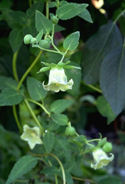
Photo: Poor Man's Ginseng is a twining, sprawling herb growing up to 1.5 m long with yellowish, purple-tinted bell-shaped flowers. |
|
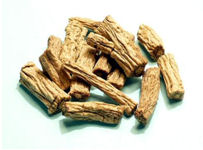
Photo: Codonopsis supplements are made from the dried root of the plant. The root contains a mixture of components that are similar to those found in Ginseng. |
Application
Codonopsis can be found in many shapes and forms. The root is most commonly found dried, but there are also fresh varieties available. Codonopsis can be raw or cooked, and is often processed as teas, tablets, and tinctures. Naturally this is a sweet, soothing herb that can be cooked with rice until it is glutinous and soft and used as a tonic food.Nowadays Poor Man's ginseng is more often used in food supplements as capsules or in tablets.
Chinese herbs are sometimes used as additives in cosmetics because of their protective, healing and maintenance properties. There is no direct evidence that Codonopsis pilosula is currently used for cosmetic purpose.
Beneficial for:
The strong point of Codonopsis pilosula is, that it is not heavy and sticky. It does not generate heat and dryness in the body. In addition to the beneficial effect on spleen and respiratory Codonopsis has a beneficial effect on health, strengthens the vitality. Codonopsis supports the immune system, promotes the (natural) immune system of the body cells, increases stamina and alertness, enhances vitality, protects against aging and helps with mental pressure and effort.According to the Dutch Guidelines KOAG / KAG allowable terms, related to this product, are:
- Lower blood pressure and increasement endurance to stress.
- Increase energy.
- Assist with digestive problems.
- Increase the milk production in the breast and providence energy in breastfeeding mothers.
- Alleviate the Effects of Stress.
- Positive effects on memory.
- Aid in the treatment of asthma and shortness of breath.
- Strengthen lungs.
- Strengthen spleen and stomach.
- Restore liver.
- Stimulate nervous system.
So far, the European Food Safety Authority (EFSA) has not approved any of the submitted health claims for this product or its components, and these should therefore not be used in the EU.
Industrial application
There is no evidence that Codonopsis pilosula is used for any purpose other than as a food component.Dosage
In food supplements and in TCM herbal mixtures, dried Codonopsis root decoction is usually advised preventative at levels of 5-10 grams per adult person per day. If the dry root or root powder is consumed entirely, then a dosage of 3-5 grams is comparable.Often dry Codonopsis root is given at a high dosage of 15-30 grams per day or in specific cases even as high as 60 grams of dried root per day.
If a concentrated extract powder is used with an extract ratio of 5:1, then an effective dosage would be 2-4 grams per day.
For an optimal effect of products for external use it is advised to add 10-15% concentrated extract powder with 5:1 extract ratio to the cosmetic product. For just getting a cosmetic effect, it is recommended to apply a minimum of 10 grams of concentrated Codonopsis extract powder per kilo of the final cosmetic product.
Contra-indications
In general, (side) effects from Poor Man´s Ginseng are rare and milder than those that occur when using real Ginseng. This is why codonopsis root is relatively safe for long term use. Be careful with the use of this herb in the case of excess heat. Few adverse effects in humans have been reported for codonopsis. Use cautiously:- in patients with bleeding disorders;
- when taking laxatives or stool softeners;
- with inflamed bowels or appendicitis;
- when trying to become pregnant.
- pregnant or breastfeeding women, because of insufficient research;
- combination with aspirin or blood thinners;
- when taking fertility medications.
More information / news
| 2014-03-06 | Prices of Chinese herbs up five fold |
| 2011-07-20 | China attacks the root of inflation: traditional medicine |
Copyright © 2011 Benseng Foodsupplements BV, Veghel, The Netherlands. See: www.benseng.nl
 |
 |
| previous | next |