
Female ginseng-Dong Quai
The botanical name for Dong Quai is Angelica Sinensis. Common trade names include Women's Ginseng and Chinese Angelica. The name Dong Quai translates as "return to order" based on its alleged restorative properties.
Dong Quai contains essential oils, coumarins, phytosterols, polysaccharides, ferulate, and flavonoids. It is the only non-animal source of Vitamin B12. The major chemical constituent of the roots is ligustilide, which can range from 0,5 - 5% in the dried root.
Introduction
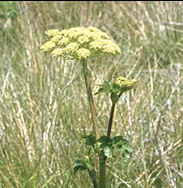
Dong Quai is a biennial and perennial plant native to China and Japan. It is commonly found in well watered soil. It can grow between 1 and 2,5 m tall. It has greenish-white flowers and leaves that resemble those of carrots or celery, which makes sense because Dong Quai is a member of the celery family. (Apiaceae/Umbelliferae).Dong Quai has been used for thousands of years in traditional Chinese, Korean, and Japanese herbal medicine. It is used primarily by women. That is why Dong Quai has been called "female ginseng".
Dong Quai possesses the distinction of being one of the few good non-animal sources of Vitamin B12, along with some varieties of yeast and micro algae like Spirulina. (Also available at http://www.benseng.com)
Benseng Foodsupplements BV offers this salutary herb in the following product forms:
| niveau kwaliteitsgaranties |
| Product code | Product description | low | normal | high |
| DQCAnn/400/EP01 | Dong Quai EP capsules bulk 1% ligustilides (400 mg/caps) | - | spec | - |
| DQCPnn/400/EP01 | Dong Quai EP VEGI-CAPS bulk 1% ligustilides (400 mg/caps) | - | spec | - |
| DQEP01 | Female Ginseng extract powder (1% ligustilides) | - | spec | - |
|
Foto: Dong Quai is a plant that can grow up to 2,5 meters high. It has cream-colored flowers that are arranged in an umbrella-shape. The leaves are similar to the leaves of celery: both plants belong to the same family. |
|
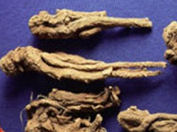
Foto: The root is the part of the plant that is used for further processing. It is light brown, light, and wrinkly. The dried root is most common, but there are also fresh varieties available. |
Application
Powdered or dried root/root slices, fluid extracts, tinctures, decoctions, and dried leaf preparations are the traditional ways of using Dong Quai orally. Nowadays it is more often taken as capsules or tablets.The root has a sweet pungent aroma that is very distinctive and it is often used in cooking, as a taste enhancer.
Topical preparations are available to be applied to the skin. Dong Quai extract has reported use in the following product types: facial moisturizer, creams and scrub.
Beneficial for:
Originally Dong Quai has been used against discomfort before, around and during menstruation. Usually you can find it in combination with herbs such as peony and ligusticum to promote a normal and regular menstruation.Dong Quai could help in reducing discomfort, mood swings and bloating. The herb is also beneficial for apathy, for maintaining a healthy blood pressure, for maintaining flexible joints, it has a soothing effect on the head and is beneficial against hair loss.
According to the Dutch Guidelines KOAG / KAG allowable terms, related to this product, are:
- Discomfort before / around / during menstruation.
- Helps with mood swings during menstrual cycle.
- Promote normal and regular menstruation.
- Helps menopausal symptoms.
- Good for heart and blood vessels.
- Blood purifying.
So far, the European Food Safety Authority (EFSA) has not approved any of the submitted health claims for this product or its components, and these should therefore not be used in the EU.
Industrial application
There is no evidence that Dong Quai is used for any purpose other than as a salutary herb or in cosmetics.Dosage
For maximum effect, dry Dong Quai root is given at high dosage of 5-10 grams per day preferably divided in 3 applications per day.As a food supplement Dong Quai is usually recommended in dosage from 0,5 - 1 grams of dry root or standardized extract powder (1% ligustilides) three times per day.
For working Dong Quai extract powder into cosmetics, most often an up to 1% concentration in the final cosmetic product is used.
Contra-indications
Dong Quai is accepted as being safe as a food additive in the United States and Europe. Its safety in wholesome doses is not known.Most precautions are based on theory, laboratory research, tradition, or isolated case reports. In this perspective it is better not to take Dong Quai by people with bleeding disorders, diarrhea, abdominal bloating, or while suffering from an infection such as colds and flu.
People with known allergy/hypersensitivity to Angelica radix or members of the Apiaceae/Umbelliferae family (anise, caraway, carrot, celery, dill, parsley) should avoid Dong Quai.
Be informed:
- Patients receiving anticoagulant therapy should be advised against taking Radix Angelica Sinensis.
- Increased sun sensitivity with a risk of severe skin reactions (photosensitivity) may occur due to chemicals in Dong Quai. Prolonged exposure to sunlight or ultraviolet light should be avoided while taking Dong Quai.
- Safrole, a volatile oil in Dong Quai, might be carcinogenic (cancer-causing). Long-term use should therefore be avoided.
- Dong Quai has traditionally been associated with gastrointestinal symptoms, including laxative effects/diarrhea, upset stomach, nausea, vomiting, loss of appetite, burping, or bloating.
- Dong Quai preparations should be used cautiously by patients with diabetes or glucose intolerance.
More information / news
Copyright © 2011 Benseng Foodsupplements BV, Veghel, The Netherlands. See: www.benseng.nl
 |
 |
| previous | next |