
Peruvian ginseng-Maca
Maca herb (Lepidium meyenii) is a root-like vegetable shaped like a radish. It is also called Peruvian Ginseng. Most botanists now consider the widely cultivated Maca of today to be a newer domesticated species: Lepidium peruvianum. The Maca is related to the radish and the turnip, and this shows in the growth habit, size, and proportions of the root.
The main active constituents in Maca root are the amino acids phenylalanine, tyrosine, histidine, arginine and a chemical called p-methoxybenzyl isothiocyanate, which has reputed aphrodisiac properties.
Introduction
Maca herb grows high in the harsh climate of the Andes Mountains in South America at elevations up to 15,000 feet. It is one of the few plants that can be cultivated here. For more than two millennia, native Peruvians have used Maca root as food and salutary herb, to promote endurance and improve energy, vitality, sexual virility and fertility.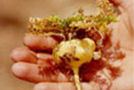
|
Photo: The Maca is similar to a radish, but off-white to yellow in colour. The root of the Maca is used for beneficial purposes, and it is the edible part of the plant. |
|
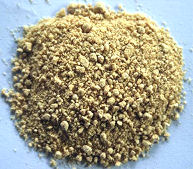
Photo: Most commonly the Maca is dried and ground for usage. Maca is the only cultivated cruciferous species which produces starch. |
Applications
From the Maca plant it is mainly the roots that are used. These roots are highly nutritious with about 11% protein content. When Maca is harvested, the roots are traditionally dried by exposing them to sunlight for 4-6 days. After they have been dried, they can be stored in cool, dark places for several years. For consumption, the dried roots are rehydrated by boiling them in water until they are soft. They can also be baked, roasted, prepared as a porridge, and have been used for making a fermented drink. The fresh roots are considered a treat and are baked or roasted in ashes (in the same manner as sweet potatoes).As far as known, Maca is used only internally.
Maca was on the market and consumed to a significant degree before 15 May 1997 and is therefore, according the EU Novel Food Regulation, allowed to be used as or in food supplements and as or in food.
Maca is not mentioned in the German Commission E Monographs, a therapeutic guide to herbal medicine. Maca is also not mentioned in the EHIA Inventory list of herbs that are considered as food.
As far as known, maca is not (yet) been added to cosmetic products.
Extracts of Maca for use in cosmetics, are as such not mentioned in the EU decision 96/335 / EC of the EU Cosmetics Directive 76/768 / EEC and / or 2006/257 / EC.
Beneficial for:
Taking Maca can lead to an increase in the sex drive, and supports with menopausal effects. In the latter case Maca is beneficial for discomforts before, around and during menstruation, it promotes a natural healthy sleep, it is good for hearing and vision.Originally Maca has been used in Peru to enhance fertility in humans and animals.
According to the Dutch Guidelines KOAG / KAG allowable terms, related to this product, are:
- Increase in sex drive for both men and women.
- Support for menopausal symptoms.
- Promotes a normal regular menstruation.
- supports the immune system.
- Increase stamina, energy, vitality.
So far, the European Food Safety Authority (EFSA) has not approved any of the submitted health claims for this product or its components, and these should therefore not be used in the EU.
Industrial application
So far there are no known industrial applications for Maca.Dosage
Today, dried Maca root is ground to powder and sold in capsules as a food supplement. Dried Maca roots are generally recommended at dosages of 5-20 gram daily.From more concentrated extract powders (with an extract ratio 5:1) a daily dosage of 1-2 gram or 4-5 gram (as a high dosage) per day is recommended.
There is no evidence that Maca is dangerous in larger quantities.
For cosmetics, there is no established recommended dosage, although impact would have to increase as the dose is increased.
Contra-indications
Maca is probably safe when used by healthy adults said doses, but there are a few observations, warnings and precautions apply:- The use of Maca is not recommended for patients with a risk of a form of cancer that is associated with estrogen receptors, endometriosis, or prostate cancer.
- Large amounts of Maca can cause flatulence.
- Caution is advised in people with high blood pressure.
- Avoid the use of Maca by people with a known allergy or hypersensitivity to maca (Lepidium meyenii) or any of the ingredients or other members of the family Brassicaceae.
More information / news
Copyright © 2011 Benseng Foodsupplements BV, Veghel, The Netherlands. See: www.benseng.nl
 |
 |
| previous | next |